Smarty Air: Sensor Station for air quality control
What is Smarty Air?
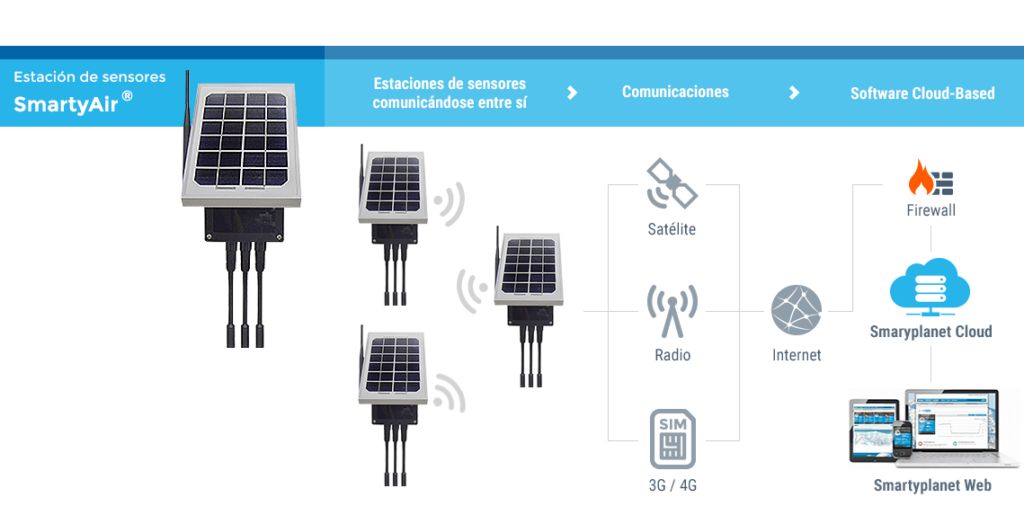
Smarty Air is an application that allows you to easily record, view, manage alarms, and share data on air quality and air pollution levels in real time. The data is collected by sensor stations and sent to the web application.
Its system is modular and highly flexible, and can grow and adapt to your needs. Being cloud-based, there are no software development costs, and it adapts to all types of installations.

Parameters controlled thanks to Smarty Air
- Temperature and humidity.
- Atmospheric pressure.
- Carbon monoxide (CO).
- Carbon dioxide (CO2).
- Oxygen (O2).
- Ozono (O3).
- Nitrogen Oxide (NO).
- Nitrogen dioxide (NO2).
- Sulfur dioxide (SO2).
- Ammonium.
- Metano (CH4).
- Fosfina (PH3).
- Ethylene oxide (ETO).
- Particulate matter (PM10).

Plug and play installation

Without complicated infrastructure

Better cost-benefit ratio

Multiple sensors

Wireless communication

Unlimited autonomy

Resistant

Sensor networks

Web display

Super-reduced maintenance
Visually easy
Every single parameter controlled by the stations is visible from the web platform

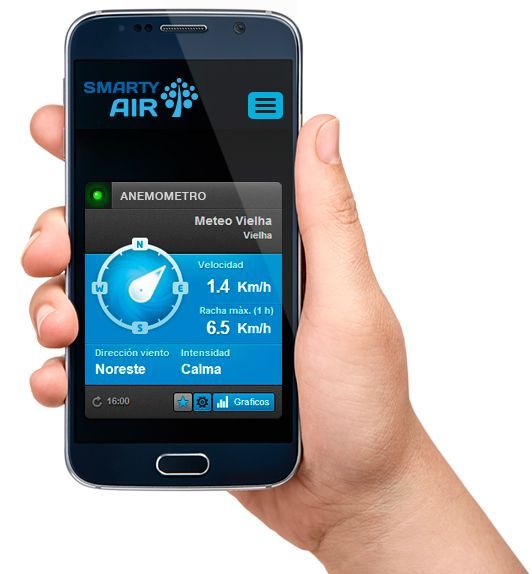
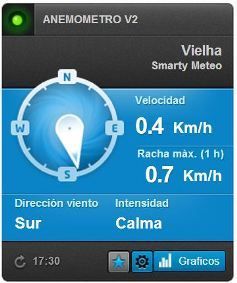
Wind control

Current time
How Smarty Air Works
Discover how Smarty Air works

Benefits of Smarty Air
- Reliable, real-time knowledge of air quality levels.
- Warnings and alarms of air pollution due to leaks or system failures,…
- Remote reading of gas emissions to improve management efficiency and costs.
- Share this data via the internet from any fixed or mobile device.
- Easy creation and management of statistics and historical data.
- Easy and quick installation and configuration of the sensor network and web platform.

Air quality assessment is defined as the result of applying any method that allows measuring, calculating, predicting or estimating the concentrations of a pollutant in the ambient air or its deposition on surfaces at a given time.
Air pollution is assessed through measurements taken by SmartyAir stations at a series of sampling points considered representative of each area. In some cases, the assessment is supplemented by other techniques such as modeling, objective estimation, etc.
On the other hand, with all the recorded data, a process of assessing certain levels of pollutants in the ambient air is carried out, and an air quality index is established based on the pollutant that has registered the worst concentration, ranging from very good to very bad.

Success stories
Supply, installation, training and commissioning of 4 compact meteorological stations for the Automatic Air Quality Monitoring and Control Network of the Autonomous Community of the Basque Country

Installation and commissioning of 4 Compact Meteorological Stations with 20 m of cable with their connectors, radio communication modem, including mounting boxes and other accessories and 3 RS232/RS485 converters for sensor output to station data acquisition systems.